|
Juliet Naked
(Reviewed September 21, 2018)
An amusing but slight adaptation of a Nick Hornby novel which can laugh at its characters without precluding the possibility that they may laugh at themselves

Won't You Be My Neighbor?
(Reviewed September 20, 2018)
Did Mr Rogers’s extraordinary capacity for love end up producing a generation of haters?
Lady Bird
(Reviewed March 6, 2018)
A delightful and not entirely politically correct movie about growing up as a Catholic schoolgirl in 2002-2003
Three Billboards Outside Ebbing, Missouri
(Reviewed February 22, 2018)
An occasionally amusing parable of guilt and forgiveness whose setting in small-town America, like the prejudices of its author, does it no favors
|
 |
Diary
ENTRY from April 5, 2021
The following is the text of my lecture on "Jane Austen on Film" for the Center for Constructive Alternatives at Hillsdale College on March 7, 2021. A video recording of the lecture itself is available here.
There’s no knowing for sure, of course. I may be wrong. But I doubt that Jane Austen would quite have approved of the movies. We know from Penny Gay’s Jane Austen and the Theatre that she was a keen theatre goer whenever she had the chance and was even quite undiscriminating in her taste, which ranged from Edmund Kean’s Shylock at Drury Lane in 1814 to the lurid melodramas of which we find several parodies among her juvenilia. But there is and always has been titillating, voyeuristic quality to the movies, a sense of the camera’s inevitable intrusion into personal and domestic privacy, that must have made moving pictures more like the amateur dramatics and amateur actors of which we know, from their treatment in Mansfield Park, that she disapproved. There, in arguing against the amateur performance of Lover’s Vows — a play about extra-marital sex and illegitimacy — Edmund Bertram pleads against his brother Tom’s contention that their absent father would approve of it because he approved of their declaiming Shakespeare when they were boys: “My father wished us, as school-boys, to speak well,” says Edmund, “but he would never wish his grown up daughters to be acting plays. His sense of decorum is strict.”
So was Jane Austen’s sense of decorum strict, like that of her alter ego, Fanny Price in the novel, who adamantly refuses to take part in the play. Lionel Trilling thought this had to do with Fanny’s, and probably also her creator’s, horror at the insincerity of anyone, like the temperamentally inclined actor Henry Crawford, who could relish pretending to be someone he was not. It is the actor in him, examples of which we see off the stage as well as on, as when he imagines himself to be a naval hero or a spellbinding preacher, that makes Fanny mistrust him. And of course females on the stage were widely and not always wrongly suspected of unchastity for as long as there had been females on the English stage — which was for just over a century before Jane Austen was born. But I think there is another reason why she might not have approved of the movies, or of television.
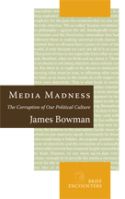 Before there was Howard Kurtz’s Media Madness, there was mine — now, alas, out of print but still available while supplies last for the cost of shipping and handling. Send $5.99 to me in care of the Ethics and Public Policy Center, 1730 M Street, Suite 910, Washington, D.C. 20036 Before there was Howard Kurtz’s Media Madness, there was mine — now, alas, out of print but still available while supplies last for the cost of shipping and handling. Send $5.99 to me in care of the Ethics and Public Policy Center, 1730 M Street, Suite 910, Washington, D.C. 20036
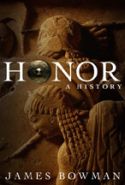 Also available, now in paperback and Kindle version, is Honor, A History, which was first published in 2006. A study of Western cultural artifacts, from the epics of Homer to the movies and TV shows of today, it is focused on explaining why Western ideas of honor developed so differently from those elsewhere — and especially from the savage honor cultures of the Islamic world. The book then goes on to trace the collapse and ultimate rejection of the old Western honor culture from World War I until the present day and to suggest the conditions that would have to prevail for its revival. Also available, now in paperback and Kindle version, is Honor, A History, which was first published in 2006. A study of Western cultural artifacts, from the epics of Homer to the movies and TV shows of today, it is focused on explaining why Western ideas of honor developed so differently from those elsewhere — and especially from the savage honor cultures of the Islamic world. The book then goes on to trace the collapse and ultimate rejection of the old Western honor culture from World War I until the present day and to suggest the conditions that would have to prevail for its revival.
Playing the fear card.
December 31, 2022.
The fate of Prime Minister Liz Truss in the UK is meant to serve as a warning to American Republicans — From The New Criterion of December, 2022 ...
Full Article
Only joking.
November 30, 2022.
Beware of those “MAGA extremists” — or not. It’s really up to you. — From The New Criterion of November, 2022 ...
Full Article
Hobgoblins.
October 31, 2022.
However great our mistrust in government, we never seem to lose faith in its ability to lead us back from the precipice of disaster — From The New Criterion of October, 2022 ...
Full Article
|



