Sticking together
“Democrats should divorce the media,” wrote Holman W. Jenkins, Jr. in The Wall Street Journal back in October, thereby implying that a marriage which has lasted over fifty years is finally on the rocks. I wonder. I wonder even more if the Democrats could divorce the media even if they wanted to. As I have observed before in these pages, the media are the dominant partner in that relationship, and they will under no circumstances, you may be assured, allow it to break up.
The media have been pushing Democrats leftward for decades now with the promise of their unqualified support to compensate the party for the loss, first, of the working class and then of most normal, sane Americans who continue to love their country and are proud of its history and institutions. As a result, the Democrats have allowed themselves to become so dependent on their media allies for their public “messaging,” for suppressing that of the Republicans and for exclusive rights to the media’s still potent scandal machine that it is doubtful whether the party could survive a split-up.
By now they have passed the point of no return in this leftward journey — the point at which the Democrats have hardly any agency of their own but depend on the media to tell them not just what to do but what to believe. You can see this process at work in Senate Minority Leader Chuck Schumer, who would pretty clearly have refused to lead his party into a pointless and futile government shutdown during the month of October if it had been left up to him, as it was in the previous March. But the bad press he got in that instance must have taught him the lesson he had obviously learned by October: to stick to the role of uxoriously clinging spouse to the uncompromising leftist media.
As in so many troubled marriages, there is a third party in the relationship and an illegitimate partaker of its intimacies. This is the permanent government, and especially its intelligence agencies, whose personnel, uniquely among bureaucrats, continue to be supremely influential with the media even when out of office. Here, for example, is some news from The Guardian:
The United States is “on a trajectory” toward authoritarian rule, according to a sobering new intelligence-style assessment by former US intelligence and national security officials, who warn that democratic backsliding is accelerating under the Trump administration — and may soon become entrenched without organized resistance. The report, titled Accelerating Authoritarian Dynamics: Assessment of Democratic Decline, was released on Thursday by the Steady State, a network of more than 340 former officers of the CIA, the NSA, the state department and other national security agencies.
Sobering “intelligence-style” assessments of this kind seem to have been the main business of the security services during the Biden years, and even out of office their agents continue to provide the members of the media with a semi-official sanction for the media’s own incessant warnings about the danger to truth, justice and the American way of the American president.
Such a warning of the dire need for “organized resistance” to the democratically elected president in order to save “democracy” was issued on the eve of the media-sponsored “No Kings” protests in mid-October. Any suggestions as to why such an organization of allegedly “former officials” should have chosen to name itself “Steady State”? The idea of having to over-rule and, ideally, depose a democratically elected leader in order to save democracy ring any bells?
The Journal’s Mr Jenkins is right to say that a Democrat-media split “would help with the America that reviles the media for lying about Mr. Trump and also the America that reviles the media for lying about Mr. Trump so stupidly that it helped him.” But those lies were also the Democrats’ lies, lies that the whole party partook of, even if only passively, by not speaking out against them. What else could you expect when they rely so heavily for support on those government agencies whose expertise lies in deceit and disinformation (see “Ripley’s Believe it or Else” in The New Criterion of February, 2020)?
Mr Jenkins concludes that
it defies the warp and rhythm of life to think Americans could ever trust such a leadership class again or bring it back to power in the post-Trump era. If Democrats don’t understand this, America’s next leadership class won’t consist of Democrats. It will consist of Mr. Trump’s political descendants and heirs. The country’s natural opposition party has 12 months before the midterms to make this break and start redeeming itself in the eyes of noncoastal America. So far, it isn’t happening.
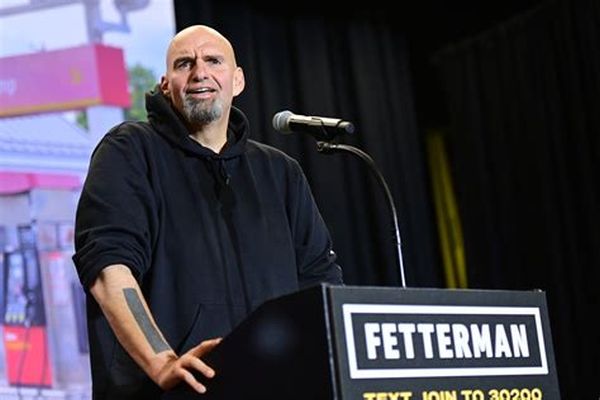
The main reason it isn’t happening and won’t happen is that the Democrats cannot deny their complicity with the “leadership class” of the media in creating the dominant culture’s false narrative of the Trump presidency as “Fascist”, “racist”, “hateful” etc. without losing their own credibility, such as it still is. Moreover, every Democrat must be as well aware as is Mr Schumer that the old Popular Front slogan, pas d’ennemis à gauche (and pas d’amis à droit) still applies in the party, since any slightest deviation from leftist orthodoxy is always punished — as would-be moderates like John Fetterman and Seth Moulton have lately discovered.
The media’s scandal culture was created precisely for this purpose: to discredit and, if possible, to ruin by any means necessary anyone deemed an enemy by the left, and they do not hesitate to use it against their own people who are minded to express a doubt as to the perfect goodness of the left or the perfect evil of the right. This mantra, parodied on the other side as “Orange Man Bad,” is the only weapon against Trumpism the media and their Democratic clients have ever had or ever wanted to have, and it is what ultimately informs the media-Democrat collaboration. Besides, and as a result of, the scandal business, the self-reinforcing self-righteousness of this collaboration has also produced the various prosecutions and other legal actions now going under the name of “lawfare” which were brought against Mr Trump, out of office, in 2023 and 2024 and, in office, in 2025 — all with the putative justification of the media scandal culture’s favorite maxim that “no one is above the law.”
Now that Mr Trump’s persecutors are beginning to be on lawfare’s receiving end, it has become clear just to what extent the likes of James Comey all along assumed that they, at any rate, like the media allies to whom they regularly leaked supposed government secrets, were above the law — a judgment in which, not surprisingly, the media are fully prepared to agree with them. Mr Jenkins was one of those in the media who deplored the Trump Justice Department’s indictment of Mr Comey at the end of September by adapting a famous witticism once supposed to have been said by Talleyrand about Napoleon’s execution of the Duc d’Enghien: “Worse Than a Criminal, Comey Is a Blunderer.”
Most criminals are — blunderers that is — or else we wouldn’t know that they are criminals. Yet Mr Comey’s blundering was and is on such an epic scale that even the mendacious media’s
determination to protect him could not prevent the discovery of his central role, along with that of John Brennan and Barack Obama, in framing the “Russiagate” hoax that crippled the first Trump administration.
For this, however, he was not indicted — perhaps because, as Bill Barr decided at the time, they couldn’t hope to get a conviction from a Trump-hating D.C. jury — but only for making false statements to Congress in 2020, long after he was fired by President Trump in 2017. It was a bit like indicting Al Capone for tax evasion. And, as I write, no one has yet been indicted for any of the FBI, CIA and Justice Department shenanigans that went into the Russiagate affair. Nor have the New York Times or the Washington Post made any move to return the Pulitzer prizes they won for acting as the mouthpiece for the deep state’s lies.
Mr Jenkins’s Journal colleague, Gerard Baker also wrote that the Comey indictment was simply a matter of tit-for-tat. Citing, first, the conventional wisdom that the Democratic legal assaults on Mr Trump were largely responsible for getting him elected last year, Mr Baker went on to opine that
Mr. Trump isn’t the kind of man to express gratitude for a gift of this sort. Instead he seems intent on repaying his enemies in kind. On a human level, you can understand it. Most of the cases brought against Mr. Trump were of dubious merit. The civil suit brought by Letitia James, New York’s attorney general, was a particularly grotesque abuse of a prosecutor’s power. Why not give her a taste of her own medicine? The answer is that it’s not only morally wrong; righting abuses of power by abusing power is a moral absurdity and a short route to national perdition. It corrupts the legal process, corrodes public faith in civic institutions, and invites further leaps up the partisan warfare escalator.
You’d think that, before calling it an abuse of power, he might want at least to glance at the question of whether or not there was any merit to the case against Ms James — or, for that matter, to the indictment of Mr Comey. If these were, as alleged, repayments in kind, were they only that? Had we to deal, then, with an equal and opposite “grotesque abuse of a prosecutor’s power”? Or could there have been anything to be said for the idea that, in Mr Comey’s case, the indictment was based on the very least of the things that he deserved to be indicted for?
The question does not interest Mr Baker, as it might interfere with his glib allusion to “conflict resolution” theory concerning “de-escalation.” In a later column, headed: “Trump Accelerates Our Decline Into Moral Relativism” he doubles down on his view of Mr Trump’s guilt in seeking to prosecute wrong-doing by noting (in the words of the sub-head) that “he wasn’t the first but is the worst to use others’ wrongs as an excuse for his own.” The latter sort of “wrongs,” apparently, could be taken for granted on no other basis than that, like the other, they took the form of legal action.
It is nevertheless true that, to such an emollient assertion of the evils of revenge, the bosom of the peace-loving person of good will must always return at least a faint echo. Holding him who hits back to be more responsible for the conflict than he who hits first must seem to the progressive mind to promise an end to the spiral of legal assault and counter-assault that our politics is threatening to become. I myself firmly believe that lawfare is a bad thing no matter which side is practising it, and for just this reason: that it requires, or encourages, on both sides the same fatal self-righteousness, the division of political actors into the good and the evil.
Yet once that Pandora’s box is opened, as it was when the Biden administration and other Democrats under its aegis used the legal weapon against Mr Trump, it is not so easy to close it again. It doesn’t take a Talleyrand to figure out that if you fail to take some sort revenge upon the impenitent, they will soon realize that they can get away with their attacks on you without paying any price, and thus those attacks will only continue, and become more frequent and devastating.
For the good of the country, I would be all for magnanimity towards Mr Comey and others who broke the law if they acknowledged their faults, or even if Jack Smith, Letitia James, Alvin Bragg etc. were simply to confess to their purely political motives in bringing their actions against Mr Trump. But of course no such thing can be expected, or even hoped for, from them any more than from their media partners in crime. Like Macbeth, they are “in blood/Stepp’d in so far that, should I wade no more,/Returning were as tedious as go o’er.”
It is just this that makes lawfare such a terrible option in politics: that once it is started there is no stopping it until one side or the other is defeated and can no longer continue. Given the extent to which and the direction in which the legal system has already been corrupted by political partisanship, and the willingness of naifs like Gerard Baker and other well-wishing critics to overlook this aspect of the Trump Department of Justice’s efforts to redress the balance between them, it is not hard to predict which will be the defeated side.
I hope I’m wrong, of course, but it must be this expectation of the Democrats’ return to power and, with it, their subsequent control of the prosecutorial discretion (and the appointment of judges) nationwide which is ultimately keeping the Democrat-media union alive and proof against any amount of discrediting in the eyes of a peace-loving, norm-loving public. In the meantime, all such journalistic lucubrations on the moral meaning of Mr Trump and his allegedly “authoritarian” government must seem to those who are not caught up in them — as even I seem to be here — curiously irrelevant to his historical significance.
For this we might do better to look to Mary Harrington, writing from the U.K. where democratic authority is currently suffering from the political equivalent of locked-in syndrome, unable to say or do anything by way of response to the popular will, about the immigration crisis or anything else. She writes at UnHerd to ask:
[I]s it inevitable that an over-large state [like Britain’s] must inevitably self- destruct in this way? Certainly our current governing class seems committed to effecting the systemic collapse of Britain’s administrative state by insisting on procedural over-engineering. But over in Argentina, Javier Milei has just been enthusiastically rewarded in the mid-terms after taking a ferocious chainsaw to his nation’s state bureaucracies and entitlements, in the name of national renewal. Further north, Donald Trump is currently taking a bulldozer literally to the White House, and also figuratively to American institutional norms, also in the name of renewal. . . Will it make America great again? There exists, it’s fair to say, a range of views on this. Nor is personal authority necessarily any guarantee of competence: those executing Trump’s political program have already made their own cock-ups, enthusiastically documented by his haters. And yet it’s probably also fair to say that some in Britain are now watching bulldozers tear through White House walls, and ICE tear through unworkable immigration procedures, and wondering what we could do in Britain if only we tore up the rulebook.
Suddenly in America, as several people noticed when Mr Trump took office last January, you can just do things. It may be that future generations will see the great division of our time as being not between the good people and the bad people, the truth-tellers and the liars, the authoritarians and the anti-authoritarians, the conservatives and the progressives, but between those who wanted to do things in the face of furious media, bureaucratic and judicial resistance — or even just those who thought that there were really important things to be done — and those who did not.
Discover more from James Bowman
Subscribe to get the latest posts to your email.