A range of derangement
We now have it on the authority of a licensed psychotherapist that “Trump Derangement Syndrome” is clinically real — though it’s probably not destined to have its own entry in the Diagnostic and Statistical Manual of Mental Disorders of the American Psychiatric Association any time soon. Writing in the Wall Street Journal, Jonathan Alpert claims that he finds an affliction worthy of the name in his Manhattan-based practice, where
the presentation aligns with anxiety and obsessive-compulsive disorders: persistent intrusive thoughts, emotional dysregulation and impaired functioning. Patients describe sleepless nights, compulsive news checking and physical agitation. Many confess they can’t stop thinking about Donald Trump even when they try. They interpret his every move as a threat to democracy and to their own safety and control. Call it “obsessive political preoccupation”— an obsessive-compulsive spectrum presentation in which a political figure becomes the focal point for intrusive thoughts, heightened arousal and compulsive monitoring.
I’m sure this affliction is very debilitating for people with such symptoms, but its presentation among our politicians and media-folk more often takes the form of an almost fanatical party spirit which might rather be described as euphoric hatred — not of Mr Trump only but of anyone with a good word to say about him or charged with carrying out his administration’s policies. When an Afghan refugee shot two National Guardsmen from West Virginia, brought to our Nation’s Capital to help fight crime there, John Hinderaker wrote for PowerLine:
I don’t know whether Rahmanullah Lakanwal, who shot two National Guardsmen in Washington, D.C., killing at least one, is 1) a raving lunatic, 2) a devout Muslim — witnesses said that he shouted “Allahu Akbar” as he murdered Americans — or 3) a sucker who fell for Democratic Party talking points. The fact that it is hard to distinguish among these alternatives is revealing.
Revealing, that is, of a worrying convergence of TDS with the vogue, now extending beyond its Islamicist origins, for expressing one’s political opinions by random murders — not to mention s the new normal electoral politics that has James Carville advising his fellow Democrats “to embrace a sweeping, aggressive, unvarnished, unapologetic and altogether unmistakable platform of pure economic rage.”
Nor is the danger of this convergence limited to Mr Trump and those under his command. Shortly before the shooting of the two guardsmen, six Democratic members of the House and Senate released a video advising members of the US armed services to disobey any order from their Commander in Chief that they may regard as illegal. No guidance was offered as to which orders already issued or in prospect of issuance the members, all of them said to be military or intelligence service veterans themselves, believed to be illegal. Nor was their message delivered in the imperative mood. But the suggestion that such orders were to be expected from Mr Trump — and expected to be carried out — may well have been influential on the shooter.
It’s hard to think of a better example of someone’s putting party over country — from the party which regularly accuses Mr Trump of politicizing the military — than encouraging a mutiny among the troops in a potential national emergency. Can it be because their insane hatred of the president has made them, as he alleges, traitors to their country? It’s an odd kind of treason, to say the least, that announces itself at once so feebly and so proudly. I think the California blogger Chris Bray has a better take on it as “passive-aggressive bad girlfriendspeak as politics. ‘I guess if you feel like you have to obey, that’s fine. No, it’s fine! I’m not mad! Let’s just go to dinner!’”
So, then, insanity? Or just neurotic point-scoring against an imaginary enemy? Either way, TDS clearly has its more severe and less severe cases, and some Democrats even show signs of convalescing. Into that category, we may put the eight senators who voted to end the foolish and futile government shutdown after 43 days in November, though they risked incurring the wrath of their fellow Democrats who continue to suffer from the syndrome. As Seth McLaughlin wrote of their leader in The Washington Times, “Sen. [John] Fetterman’s maverick mantra of ‘country over party’ increasingly frustrates fellow Democrats.” That “country over party” is now a “maverick mantra” among Democrats tells you all you need to know about today’s Democratic party.
Yet for all the violent passion, and passion for violence, apparently swirling over, under, around and through our politics we may also find in the mix a curiously unserious quality to it all. The young man who murdered Charlie Kirk in September seems to have done so under the impression that poor Mr Kirk would have disapproved, had he known of it, of his erotic play with on-line “furries” in his spare time. And this disapproval, in his disordered mind, was transmuted into “hatred.” Pace Mr Carville, the “rage” in our political culture today appears to me to have little to do with economics.
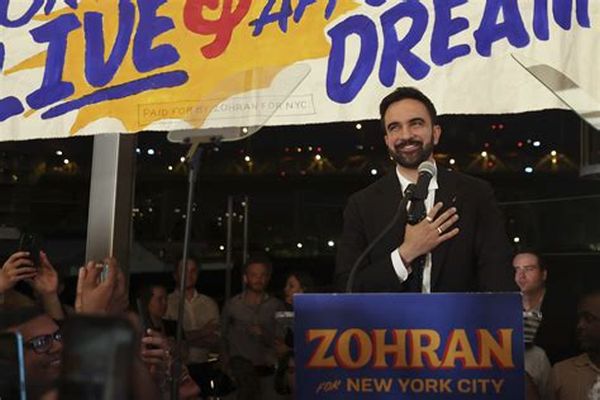
All the same, economic resentment may provide a color of respectability to grievances of a psychologically deeper and darker sort. This is what I think happened in the New York City mayoral election in November — or at any rate in the media’s reaction to it, of which Mr Carville’s call to “rage” in The New York Times struck the keynote. Although a third of voters gave as a reason for their vote “to oppose Trump” — and 77 per cent of these voted for the self-proclaimed socialist and supporter of Hamas’s Islamic terrorism Zohran Mamdani — all that anyone among mainstream political commentators could talk about was “affordability.”
Like Mr Carville, they were obviously eager to seize on this idea as the fated sword destined to slay the Trumpian dragon, but all of a sudden the word “affordability” was also much on the lips Republicans and independents of every stripe who saw in it a way for the political elites to hop on the populist bandwagon which has hitherto been the exclusive property of Mr Trump and his basket of middle-American “deplorables.”
There are several things to be said about this idea. One is that if New York City voters really wanted “affordability,” they wouldn’t be New York City voters. What they really want is the amenities for which they have to pay by living in one of the world’s most expensive cities to be made costless to them. Socialism was made for such people, as was the disillusionment with socialism which never seems to be quite complete or permanent. People want too much to believe in it.
This is a reminder, too, that the meaning of affordability is entirely subjective. One woman’s affordability is another woman’s penury — or affluence. People who are dissatisfied with their lives for any reason can readily locate the cause of their unhappiness in life’s unaffordability if there’s anything at all they want that they haven’t the money to buy. And who shall say them nay? Nothing is affordable — or unaffordable — but thinking makes it so, which makes the thought perfectly adaptable to the blame of anyone who might be supposed in any degree to have caused it to be so.
Moreover, as several observers have pointed out, insofar as there is a crisis of unaffordability, it is much more plausibly blamed on the same political elites who now were seeing it as their ticket back to power. The inflationary spending spree of the Biden administration has had more to do with current inflationary pressures than anything President Trump has done, as has the Democrat-sponsored “Affordable Care Act” of 2010 which, as even some Democrats are now admitting, has only made health care less affordable.
In the end, “affordability” seems as fantastical as any other of Mr Mamdani’s promises — unless, as seems possible, he makes the city more affordable by making it into a place where no one wants to live anymore. But inevitably, the success of the promise of affordability in attracting historically ignorant voters must lead many on the right to echo the Wall Street Journal’s William McGurn when he writes that “Republicans need a free-market answer to Democrats’ turn toward socialism.” I think he’s wrong about this since, in the contest of fantasy with reality, fantasy always wins. At least we may expect it to be so with the Harry Potter generation of young people.
And who can doubt that Mr Mamdani’s appeal to his already so largely Trump-deranged followers had much to do with that other favorite fantasy of the left: free (or more “affordable”) stuff? Surely, support for Hamas terrorists and criminal illegal aliens, or driving the drivers of America’s financial industry into tax exile in order to finance welfare giveaways, city-run grocery stores and the like hare-brained ideas must be co-morbidities with the sort of Trump Derangement Syndrome that caused President Biden to welcome the assassin of Guardsman Sarah Beckstrom along with a few million other alleged asylum seekers into the country, seemingly only in order to spite Mr Trump.
You can’t help wondering how far the Mamdani supporters knew — or cared to know — about what they were voting for. Matt Taibbi had something to say about that:
At anti-Trump protests I ran into people waving hammer-and-sickle flags and found in talking to them, they had no idea what they were celebrating. Western tourists visit places like Auschwitz en masse, but nobody goes to Solovki or Vorkuta. Like [Hasan] Piker, they think the Soviet Union is just misunderstood. . . To people who grew up behind the Iron Curtain, Mamdani is an immediately recognizable type, a disciple of the Leninist school of agitation that teaches effortless insincerity as a necessary means to reaching power.
And his example is particularly telling:
Mamdani’s victory speech was almost Trumpian in its trolling aims. It’s impossible to believe he didn’t slip the word small into his headline quote — “We will prove that there is no problem too large for government to solve and no concern too small for it to care about” — as a way of freaking out people who were raised in societies where there was no such thing as a private conversation, let alone private property. His apparently total disdain for American history seems to be a selling point for his fans, which again speaks to the failure of the recent generation of American politicians. It also points to the corruption of universities, which apparently haven’t taught a few generations of students that most societies are too hungry and stressed to even think about “gender-affirming care,” much less spend $65 million on it.
The comparison with President Trump was made more than two weeks before the “100% Communist Lunatic” mayor-elect and the “fascist” president had what The Hill called a “perplexingly positive” meeting and Fox News described as a “love fest” at the White House. Had Mr Trump himself taken a homeopathic dose of his eponymous derangement syndrome — as I once before speculated he had? (See “Visions of the Future” in The New Criterion of January, 2023.)
Many years ago — I think it was at about the time that Bill Clinton announced, on the threshold of an era of even bigger government, that “the era of big government is over” — I announced what I saw as the advent of post-modern politics, or political rhetoric happily divorced from political substance and designed only to affirm the personal authenticity and benevolent intentions of the speaker. This was, I believe, the positive counterpart of the media obsession with scandal and its endless assertion of the antithetical qualities to these among the politically unfavored right.
The president is so hated by the media partly because he can play the scandal game as well as they can and even, occasionally, beat them at it. The “love fest” in the Oval Office shows that he (not to mention Mr Mamdani) can play it the positive way as well. It also suggests the extent to which Mr Carville’s “rage,” along with much of the rest of the bitterness and acrimony in our politics today which has been projected by some as likely to issue in a new civil war, is really just for show. It’s a new form of costless virtue-signaling — costless to the virtue-signaler anyway, if not to the people who believe him.
We should all be grateful to Jonathan Alpert for confirming what many of us have long supposed about Trump Derangement Syndrome. What was that again about “Science is Real”? But I think we need to qualify his judgment by recognizing that TDS, like Covid-19 as we now have reason to believe, is a human-engineered affliction. And the CIA has been intimately involved in the production of both. You have only to ask, cui bono? for the answer to be obvious. Hysterical hatred of President Trump and his MAGA supporters, however synthetic, benefits no one but the media-Democrat alliance with the Deep State.
In the case of the media and the deep state, their interest in keeping it up is clear. The media increasingly depend for their very survival on selective scandal-mongering. Just look at the relative amounts of attention given to a non-story like the Epstein files as opposed to what would, under other circumstances, be the biggest story since Watergate: operation Arctic Frost, the FBI investigation into Donald Trump’s 2020 presidential campaign that involved, among other abuses, illegally spying on eight sitting Republican senators through their phone data.
Without the demand on the part of the Trump-haters for anything negative, or even potentially negative about the President — “The Epstein Files Could Finally Sink Donald Trump” wrote Chris Lehmann for The Nation — the whole business-model of the legacy media would collapse overnight. And the Deep State, also known as “the Swamp,” has an equally obvious interest in ending the career, by fair means or foul, of someone who poses as much of a threat to their long-accumulated power as Mr Trump. Hence Russiagate. Hence Arctic Frost.
But why are the Democrats, historically a real “big-tent” party, so eager to join this cabal of Trump-hating elitists? To understand this you have to understand that the Democrats, under the first Trump administration and led by the media, deliberately chose to become a revolutionary party. And the first requirement of any revolutionary party is the ability of its leaders to enforce party discipline upon its less radical membership. Trump-hatred, more than anything else, enables them to do this.
The demonizing of Mr Trump and, to a slightly lesser extent, all Republicans has the practical purpose of making it more difficult, even impossible, for moderate Democrats to react to the left’s insurgency within the party by defecting to the Republicans, for whom their eternal hatred has long since been brought to the boil. Such a thing has become almost unthinkable for those who, though otherwise mentally healthy, have been so imbued with Trump hatred as to have made it a part of their identity.
Revolutionary ideologues must always try thus to exclude the summer soldiers and sunshine patriots by demanding that their followers identify themselves with their political opinions. The left has always encouraged people to do this in order to set such opinions in stone and prevent those who hold them from ever wavering in response to the grim business of revolutionary terror, let alone from turning instead to some more moderate or pacific creed — or no creed at all. This ideology, known as progressivism, is now, for progressives, “who they are,” and so can never change without a kind of self-abolition. But that, too, like any religious or quasi-religious faith is a matter of choice.
Discover more from James Bowman
Subscribe to get the latest posts to your email.