The aristocracy of feelings
When Ronald Reagan was elected president in 1980, I was living in England and briefly became an object of ridicule among my English acquaintance for sporting my Reagan button. All but universal among the Britons I knew was the attitude that the US could not be a taken seriously as a country on the world stage if it elected a movie actor to lead it.
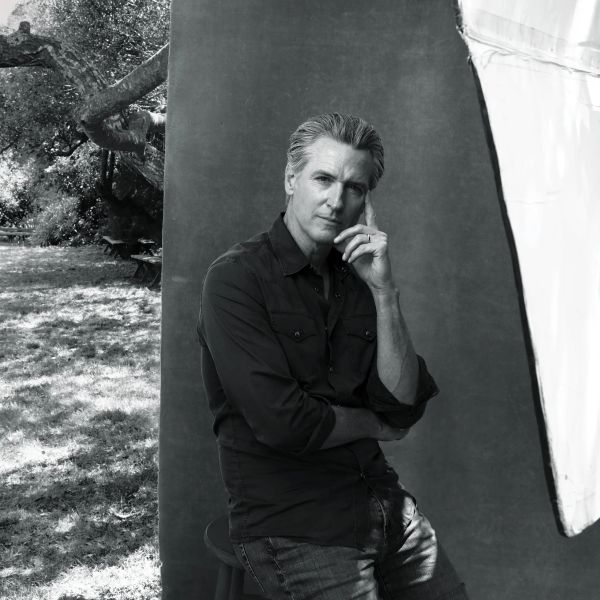
Well, that was then, when actors aspired to be presidents. Now, judging by the latest Vogue, we have would-be presidents who aspire to be actors. In photos by Annie Liebovitz, California Governor Gavin Newsom is buffed up to look like the Marlboro man (remember him?) without his horse.
This is just one of the ways in which Governor Newsom appears to think that imitating our latest actor-president, Donald Trump — particularly in his rudeness to opponents, his outspokenness and his availability to the media — is his route to power. But the cowboy image suggests that there’s also a touch of Reagan there in the wardrobe department of this latter-day two-term governor of California.
In Annie Leibovitz’s Vogue photo, Mr Newsom appears in an open-necked, Western-style shirt which is not tucked in to his jeans and has the sleeves rolled up to the elbows. Maya Singer the gushing profile writer obliges by calling him “embarassingly handsome, his hair seasoned with silver, at ease with his own eminence” and “seeming, yes, presidential.”
Reagan, like many Hollywood actors of the period, played a lot of cowboys on screen, and he used to spend weekends at the Reagan ranch on horseback. But when he wanted to look presidential he wore a suit and tie to be photographed at his desk. In fact, it is said that he never even took off his suit-coat while working, out of respect for the office.
Vogue’s obsession with his successor’s appearance, though hardly surprising, has him bathed “in an oh so California magic-hour glow,” and continues the press-agent prose throughout the article and without a trace of irony. Ms Singer also notes, in puffing the Newsom memoir, Young Man in a Hurry, that even as a schoolboy, the governor modeled himself on another actor, Pierce Brosnan as Remington Steele, “a suave con man” on television in the 1980s.
My English friends all those years ago were heirs of a tradition which, though much knocked about during the 20th century, still regarded politics as an honorable profession and acting, especially movie acting, as, well, not. Neither they nor anyone else would be likely to make that distinction today — a fact which, paradoxically, works in favor of the actor-celebrity. Nobody ever expected him to do anything more than look like an honorable man.
Honor itself — which in essence means fame, though a particular kind of fame in a particular social context — is as little understood as it is aspired to today. It has gone, along with the honor culture that gave it meaning, to be replaced by celebrity, which is fame full stop. We used to have words like infamy or notoriety to indicate the wrong kind of fame. Now, “notoriety” in common parlance is just a synonym for fame.
Perhaps this is why the political class, who still style themselves as “the Honorable” — or “the Right Honourable” for Members of Parliament — so often seem to aspire to be mere celebrities, like Gavin Newsom. They think it’s the same thing as being honorable. Celebrity is the only kind of fame they know, or value.
This must also be the reason why ostensibly non-political celebrities, like Billie Eilish (among others) at the Grammy Awards ceremony last week, feel called upon to make their political opinions known to the world. Aren’t they, merely by virtue of being celebrities, a sort of ex officio politicians anyway? They certainly belong among the ranks of the superior people.
The route to the ersatz honor on offer by the celebrity culture is through empathy. We have replaced the old nobility, official or unofficial, which cultivated honor with an aristocracy of feelings. And, as Hillary Clinton explains in the latest issue of The Atlantic, empathy is the first and most important feeling that marks you out from the crowd as a really superior person. Like herself.
Of course it can’t be empathy for just anybody. Not Republicans, for instance, or Trump supporters, but only those certified by her and her fellow progressives as oppressed — who are thus the presumptive victims of Republicans and Trump supporters — where they are not like the long dead Indians about whose “stolen” lands Ms Eilish professes to be so solicitous.
Paul Bloom wrote an interesting and challenging book a few years ago called Against Empathy, but I think that even he missed the real point about this vogue word, which is that empathy doesn’t exist. Not, at any rate, as what its advocates claim it to be, which is feeling with or sharing the feelings of another. “Empathy” is just sympathy with a college education; sympathy in the conceit, that is, of someone who thinks (or professes to think), like Hillary Clinton, that she feels more deeply than other people.
Her husband Bill laid claim to the same supposititious virtue years ago when he famously said, “I feel your pain.” Back then most people sort of knew that he didn’t really feel anybody’s pain but his own. They must have thought it honorable in him, however, that he thought he ought to feel their pain. Or to pretend to do so in order to win their votes.
All the celebration in the Vogue article about Governor Newsom’s fine feelings is presumably meant to be seen as analogous to his fine appearance. And both are effective camouflage for the fact that California during his period in office has become, certainly in the view of the hundreds of thousands who have left the state, a fiscal, social and political basket case.
But that’s the great thing about being a celebrity! You only have to feel, or to say you feel, and not actually do anything. Billie Eilish doesn’t have to give up her multi-million dollar home to the poor dispossessed Native Americans on whose land she herself alleges it was built. She doesn’t even have to go to Minneapolis and join the highly coordinated left wing effort to thwart federal agents in the enforcement of federal law. She only has to pronounce from on high, “F*** ICE!” to show that she, like all the other feelings-aristocrats at the Grammys, feels for them.
Back in the days of the old honor culture, another American president, Theodore Roosevelt, paid tribute to what he called “The Man in the Arena” who actually accomplished something — or who failed greatly in the attempt — and “not the man who points out how the strong man stumbles, or where the doer of deeds could have done them better” as worthy of honor. But as both Gavin Newsom and Vogue have reason to know, that’s not how they roll in California these days.
Discover more from James Bowman
Subscribe to get the latest posts to your email.