Ideological follies
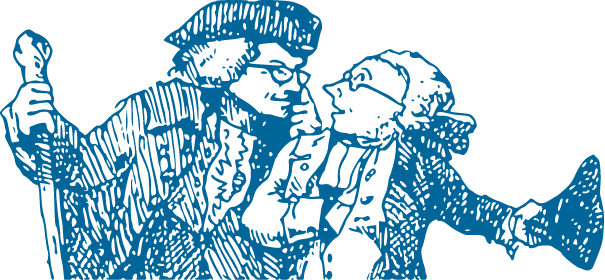
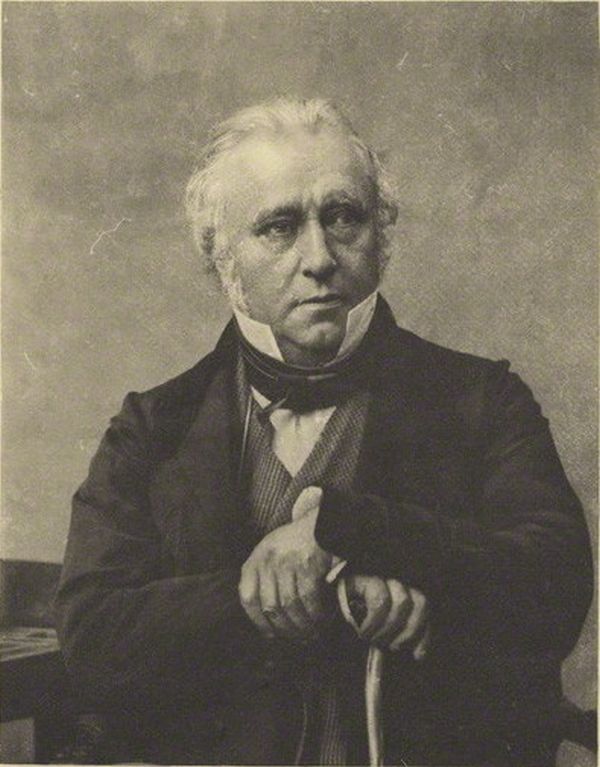
“Paul Ehrlich Was Always Wrong, Never in Doubt” wrote Jason Riley for The Wall Street Journal on the death in March at age 93 of the professor whose best-selling book, The Population Bomb (1968) turned out to be a dud. But the eminent Professor Ehrlich was not so wrong nor so doubt-free as half the world seems to be today. Nowadays you don’t have to be as learned as a Thomas Babington Macaulay to merit Lord Melbourne’s jibe: “I wish I were as cocksure of anything as Tom Macaulay is of everything.” In fact, ignorance is almost a precondition for the perennially cocksure pundits and politicians of today.
Gerard Baker quoted Lord Melbourne’s witticism, also in the Wall Street Journal, against what he calls the “hyperpartisanship” on both sides of today’s political culture as it was made manifest by the many confident pronouncements of ultimate triumph or disaster in the Iran war after no more than a month of fighting. To some extent the rush to judgment in the media results from the journalist’s eternal hunger for a “scoop.” Everyone wants to be the first to “call” a war, no less than an election, and the media long ago made up their mind that any war fought by the US, and especially any war initiated by its hated president, must be a fiasco.
But Mr Baker’s hyperpartisanship also tends to breed hypercertainty — not just about the war but about everything — because it is increasingly based on ideological thinking. The ideology in question has historically been a strictly left-wing phenomenon — a quasi-Marxist utopianism called “progressive” or “woke” which, like Marxism, casts its projections of new social realities in terms of historical inevitability. As I have written more than once in these pages, Marxist (or Macaulayan) cocksureness is what this kind ideology is for. Unlike mere opinion, which can be right or wrong, ideology, being in its own conceit historically predetermined and thus unfalsifiable, always comes, for those who believe, with an ironclad protection against doubt and, therefore, any need ever to acknowledge error.
Lately, however, we have begun to see new ideologies emerging on the right, called into existence (I believe) by a desire for the same kind of certainty enjoyed by the left ideologues. Now even home-made ideologues like Paul Ehrlich are deciding that anyone can play the ideological game and announce that they are on “the right side of history” on no other basis than their own intellectual vanity. This gives you not only unbreakable certainty but a social identity that can be of great economic value, as we see in the ideology that the climate cultists have made out of “Science” — which, when it was just plain, lower-case science, depended for its very existence on the falsifiability of its tenets by new information.
Their efforts to turn just-plain-science into an ideology with religious overtones has since borne further fruit in the form of “gender science” and, during the Covid 19 pandemic, the confidence of the scientific establishment epitomized by Anthony Fauci’s declaration that Science, c’est moi.
Scientific officialdom thus demanded of everyone conformity with the beliefs of the scientific ideologues in authority, both about how to deal with the disease and about its origins in China, condemning all heterodox views on such subjects or, later, on the safety or effectiveness of the vaccines against it, as “misinformation” and demanding their suppression.
Though still mostly on the left, this new sort of ideologue has lately found his counterpart on the right, where many now seek to emulate the left’s comprehensive and ever-undoubted programs for social improvement and so also seek to gather about themselves the mantle of ideological infallibility. People with impeccable anti-communist credentials, for example, will see no contradiction in making an answering ideology, with all of ideology’s hypercertainty about what to do or to believe in any situation, of the free market or of Christian moral teaching.
This ideology-envy on the right has been especially evident since the beginning of the Iran war. “I spent 25 years fighting neo cons. Then Trump became one.” So wrote Scott McConnell for The Spectator when the war was barely two weeks old. Neither Mr McConnell nor The Spectator noticed the piquant irony about this idea. Years ago, back in the George W. Bush era, Jacob Heilbrunn wrote a book about the so-called neocons titled They Knew They Were Right, the burden of which was that a lot of ex-communist ideologues had constructed a kind of mirror-image of their former faith as a rival ideology. That’s what got them into the “forever wars” of the first two decades of this century which were so played up by candidate Donald Trump. Now Scott McConnell, having repeated the process in reverse, was accusing the president of apostasy for not sticking to what he regarded as his own neo-neocon ideology.
And, of course, he was not the only one. Writing with a similar assurance to Mr McConnell’s, Christopher Caldwell confidently announced, also in The Spectator, “The End of Trumpism” — which, of course, presupposed that there was such a thing as “Trumpism” to begin with. As Abe Greenwald wrote for Commentary’s Daily Newsletter,
The Trump worshippers of yesterday are now proclaiming Trumpism dead. Christopher Caldwell and others have written articles renouncing Donald Trump for launching the American-Israeli military operation against Iran. They don’t say it, but those of the disenchanted flock have come to realize, in part, what many of us already knew: Trumpism was never alive to begin with. They made it all up. Trump’s early supporters on the intellectual right founded think tanks and publications dedicated to unearthing an “ism” somewhere in the reality star’s grab bag of billionaire bluster, everyman grievance, and showbiz insult. Unsurprisingly, they emerged with exactly what they wanted to see. This was mostly a negative agenda, focused not on regeneration but rejection. Trumpism was supposed to reject liberal social engineering, conservative fiscal restraint, neoconservative hawkishness, and neoliberal free markets. In other words, whatever competing political ideas were in circulation before Trump took office would be wiped from the menu. As Caldwell puts it in the Spectator, “The Trump movement is what happened when Americans discovered the system could not be reformed democratically, only dismantled.” Which goes to show that the inventors of Trumpism were already developing the adolescent’s attraction to revolution.
I don’t say that Mr Trump has done nothing to make such people believe he was one kind of ideologue opposing another, but in practice I share Abe Greenwald’s opinion that he has not an ideological bone in his body. Any “ism” attaching itself to his name apart, perhaps, from “pragmatism,” is an illusion created by the habit of left-wing ideological thinking now finding its counterpart on the right.
Of course, the legacy media gleefully reported — what was much more interesting to them than the success or failure of the war itself — that it had hopelessly divided “the right” or “the MAGA base” and disingenuously echoed Mr McConnell’s sense of betrayal by the man who, as they supposed, had promised not to repeat the “neocon” mistakes of the Bush era. Such people cast Mr Trump as someone who, like themselves, had made a new, isolationist ideology out of opposing the old, interventionist one, and they were now choosing to oppose him for betraying the former by reverting to the latter.
It is not so. Like President Lincoln, whose mantra was: “my policy is to have no policy,” President Trump has always dealt with the world’s (and his own) problems on a strictly ad hoc basis. As Harold Macmillan once put it when asked what worried him most: “Events, dear boy. Events.” Both Lincoln and Macmillan, like Mr Trump, were accused of lacking principle, but in politics it is an inescapable truth that “principle” is most often cited when it is an excuse for not doing something that badly needs doing — even when no one is quite sure what the principle in question is.
As I write, a partial government shut-down, designed mainly to inconvenience air travelers and some of the most wretchedly underpaid government employees there are in order to cripple any attempt by the Trump administration to enforce the country’s immigration laws, is entering its seventh week. The Republican majority in Congress could end it at any time, but instead chooses to allow the Democratic minority to hold the government and the traveling public to ransom — even if it means that they get blamed for the shut-down and so lose their majority in the mid-term elections. After which, the Democrats will no doubt themselves do away with the filibuster.
And all for — what principle, exactly? Nothing but sticking mindlessly, with the filibuster, to one of those “norms” that our famously norm-busting president is forever said to be violating. This seems to me to be the most pathetic sort of ideology imaginable: to make an inviolable and infallible system out of continuing to do what has been done before even if the reason for doing it — in this case, the preservation of senatorial comity over and against raw partisanship — has long since disappeared, along with most other remaining traces of senatorial comity.
This is just one more way in which mere bureaucratic inertia has become, in practice, the ideology of so many of the Trump-haters of both left and right who, starting from the assumption that they are always right, are constantly driven to the certain and unshakable belief, elevated to the level of an ideology, not only that the president is always wrong but that the status quo ante Trump, sometimes called “the rules based order” must be as right as they are.
It can be no surprise if such people are lightning quick to pronounce the war a failure. Everything is a failure, to them, when it has Donald Trump’s name on it. But there are a disturbing number of people on the right — though perhaps not all of the war-skeptics there — who, having made an ideology of anti-interventionism, are equally precipitate to pronounce the war a “quagmire” if not a complete disaster. For them, any American war, especially any American war in the Middle East, would be a disaster.
Their sense of betrayal by a man whom they had supposed to have shared their pacifist ideology naturally breeds conspiracy theories and especially the most venerable of all conspiracy theories: that which blames [insert your preferred evil here] on the Jews. It was probably inevitable that someone within the administration would jump ship with the excuse that the president had become a dupe of the Israelis. That someone turned out to be Joe Kent, the director of the National Counterterrorism Center. In his resignation letter to President Trump, Mr Kent wrote that “I cannot in good conscience support the ongoing war in Iran. Iran posed no imminent threat to our nation, and it is clear that we started this war due to pressure from Israel and its powerful American lobby.”
You can see how someone whose sympathies resonate to the cry of “America First” might look at Israeli influence the way the original America Firsters of 1939-41 looked at British influence on the Franklin Roosevelt administration. But then, as now, America’s allies have not been arbitrarily chosen by people looking on with Olympian detachment at foreign conflicts an ocean away. With Britain in 1941, as with Israel in 2026, America shares a community of interest which cannot but regard a threat to their country as, equally, a threat to ours.
President Trump made exactly this point in appealing, fruitlessly as it turned out, to our sometime European allies in NATO, many of whose cities are already within range of Iranian missiles. They had an even greater common interest with Israel than we did, but having largely disarmed under the protection of the American defense umbrella, they preferred to lie low and hope for the best by not offending either Iran or their own terrorist-sympathizing Islamic populations. There seems to me a much better case for saying that their non-intervention was owing to this domestic immigrant influence than that America is only making war on a declared enemy of nearly half a century because of Israeli influence.
The ideology most influential on the war’s opponents of both left and right is anti-colonialism. On the left this began with Lenin’s belief in “imperialism” as “the highest stage of capitalism,” which in turn led to the anti-colonialist ideology which has gone on from the de-colonization of Africa and Asia to the colonization of history departments throughout the Western world. On the right it’s more like the reflexive (as opposed to theoretical) anti-colonialism of Dwight Eisenhower which led him to pull the plug on the Anglo-French and Israeli invasion of Suez in 1956.
But Eisenhower, at least according to his Vice President at the time, Richard Nixon, admitted that his intervention was a mistake. That is something a dedicated ideologue will never do while retaining his ideology. Because the anti-colonial ideology casts the US and Israel in the same mold as colonialist oppressors, it seems only fair play for us anti-ideologues who reject the oppressor/oppressee model of political reality to keep the two countries together as exponents of a sort of benevolent, neo-colonialist mission civilisatrice in a region that has been rife for centuries with the sort of barbaric tribalism that we saw on horrifying display on October 7, 2023, not to mention countless other acts of Iranian-sponsored terrorism since 1979. “What did ya’ll think decolonization meant?” wrote Najma Sharif at the time. Only a fanatical ideologue could think, let alone say such a thing in response to such atrocities.
Here’s something that my old friend Richard Vigilante has written about Israel which puts the war into its proper context.
Consider what Israel is, stripped of rhetoric. It is a country with no margin for error. No strategic depth. No ability to lose a war and recover at leisure. It cannot afford the luxuries of confusion that larger nations indulge. In Israel, the distance between decision and consequence is short; reality cannot be avoided. Under those conditions, self-pity is unaffordable. Dependency is fatal. Failure must be converted into learning, quickly. “Responsibility” is not a slogan; it means no one else is coming, and excuses do not change outcomes. Israelis do not whine. They fight. They improvise. They adapt. This is how Israel became America’s most effective ally. It builds missile defenses that work. It develops intelligence that delivers. It produces technologies that embed themselves deep inside the systems of the global economy, as we have called them “platform” technologies — often unseen, but indispensable. This tiny desert nation can do these things because of a particular relationship to reality: a willingness to learn, to iterate, and to own outcomes.
In other words, Israeli survival demands the ultimate in anti-ideological thinking. It cannot afford to make up its mind in advance according to some theoretical scheme, as ideologues do, about what to do in confronting its many enemies but must proceed, like science before it became Science, by trial and error. And of course it cannot do that without admitting to error, and adjusting its beliefs and behaviors accordingly. To me, this reliance on self-doubt for self-preservation is not only the antidote to ideology and all its certainties but the touchstone of the civilization that both America and Europe once, pre-ideology, took it for granted they shared with Israel.
Discover more from James Bowman
Subscribe to get the latest posts sent to your email.