
Man Who Wasn’t There, The
Always worth watching, the Coen Brothers tell us, as they have done so often in the past, that truth is elusive and life is absurd. But this is old news.
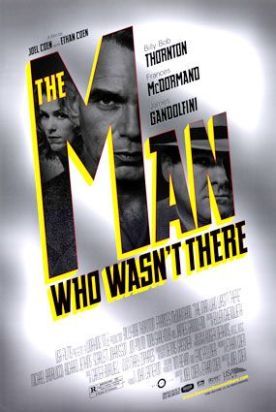
Always worth watching, the Coen Brothers tell us, as they have done so often in the past, that truth is elusive and life is absurd. But this is old news.
Why do journalists think they have to seize the opportunity of a great
national tragedy to show off their literary skills?
—from the November New Criterion

Some of the remarks made about September 11th have been so stupid that only a professor could have said them.
—from The Wall Street Journal
Can Paul Krugman and Jonathan Chait call the President a liar? Can they be
horsewhipped for doing so? Who will defend his honor?
—from the October New Criterion
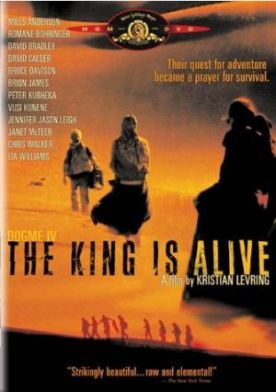
You’ve got to wonder about the chutzpah — or the stupidity — of a director who would invite comparisons between his movie and what is arguably the greatest work of dramatic art ever penned, Shakespeare’s King Lear. But the Danish director, Kristian Levring, has done it, and on the whole we can be glad that…
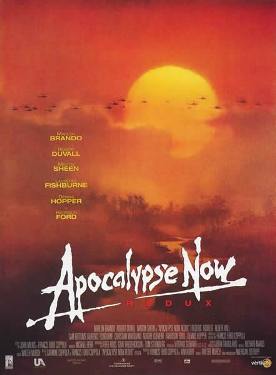
The full length version of my review of Francis Ford Coppola’s Apocalypse Now Redux which appeared in a shortened form in the September-October American Spectator
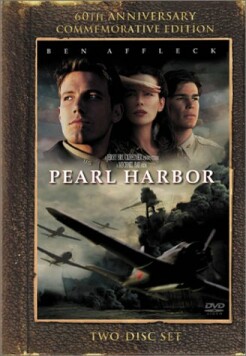
Pearl Harbor, written by Randall Wallace and directed by Michael Bay, begins with a visual pun, which is also a leitmotif throughout the film: the impossibly big and gorgeous image of the setting sun. Remember who used to run something called the empire of the rising sun? The movie’s patriotism is almost shocking. Along with…
Remember Gary Condit? What a long time ago it all now seems.
—from the September New Criterion
It is, I believe, always a mistake to criticize a movie for not being the book it is based on—or, indeed, for not being anything at all. Every artist deserves the courtesy of being assessed on the basis of what he tried to do and not on that of what he didn’t try to do….
To the list of things we wouldn’t know if Hollywood didn’t tell us we have added this summer the fact that mechanical people will one day be better-designed than the original, organic models, that the Japanese in 1941 were a noble and warlike race whose bombing of Pearl Harbor was justified but regretted even as…
This is the abstract field.
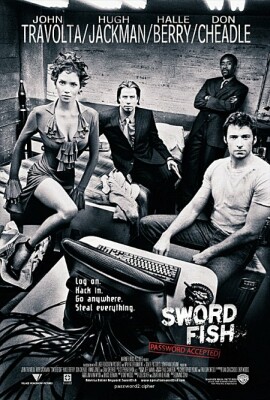
As an example of postmodern movie-making, the beginning of Swordfish, written by Skip Woods and directed by Dominic Sena, takes a lot of beating. John Travolta looking like the middle-aged dandy of which he has made rather a speciality since Pulp Fiction, is shown in tight close-up in the role of movie critic. “You know…